
Most SaaS teams waste weeks rewriting comparison pages because generic AI tools still demand heavy human edits. Some platforms produce generic drafts that rank poorly against direct competitors. The right tool must handle SERP analysis and bulk output without extra rewriting cycles.
This article lays out seven concrete options with their exact workflows for comparison pages. You will finish with a clear ranking that puts Autoblogging.ai first and shows how the others fall short on integration or depth. The final section gives a direct decision checklist to pick one tool and start publishing.
What to Look For in AI Article Writers for SaaS Comparison Pages

SaaS comparison pages succeed when writers apply exact structure, verified metrics and direct feature breakdowns in every section. AI article writer tools must handle this specialized format to drive real results. Generic content fails to rank because comparison page optimization requires precision.
Five evaluation criteria separate effective platforms from basic options. Buyers should examine each factor before selecting their content generation software.
Depth of SERP competitor analysis with LSI keyword extraction determines ranking potential. The best AI writing tools scan top results and extract related terms automatically. This process reveals content gaps that manual research misses.
Without this capability, comparison pages stay generic. AI SEO tools that perform this analysis surface long-tail opportunities competitors overlook.
Bulk generation capacity matters when teams manage multiple products. Article writing automation should handle large batches without quality loss. Manual creation at this scale becomes impractical.
Platforms with this feature support growing SaaS content strategies across product lines. AI content creation at volume requires this foundation.
WordPress direct integration eliminates workflow friction. AI blogging tools should publish directly without CSV exports or manual uploads. Extra steps slow production and introduce errors.
This capability keeps SEO content writing moving from draft to live page without delays.
Credit rollover policy protects investment across billing cycles. Some AI copywriting platforms reset unused credits monthly while others carry them forward. The difference affects cost efficiency for teams with variable output needs.
Buyers should verify this policy before committing to annual plans.
Number of supported languages and integrations expands reach. Top AI text generators cover multiple languages and connect with numerous third-party tools. This flexibility supports global SaaS marketing content and complex tech stacks.
Limited language support restricts audience growth. Integration count determines how well the platform fits existing workflows.
| Criteria | Why It Matters | Example Question |
|---|---|---|
| SERP Analysis | Identifies ranking opportunities | Does it extract LSI keywords? |
| Bulk Capacity | Supports scale | Can it generate large batches? |
| WordPress Integration | Removes manual steps | Does it publish directly? |
| Credit Rollover | Protects budget | Do unused credits expire? |
| Languages and Integrations | Expands capabilities | Does it support multiple languages and integrations? |
1. Autoblogging.ai - Best Overall
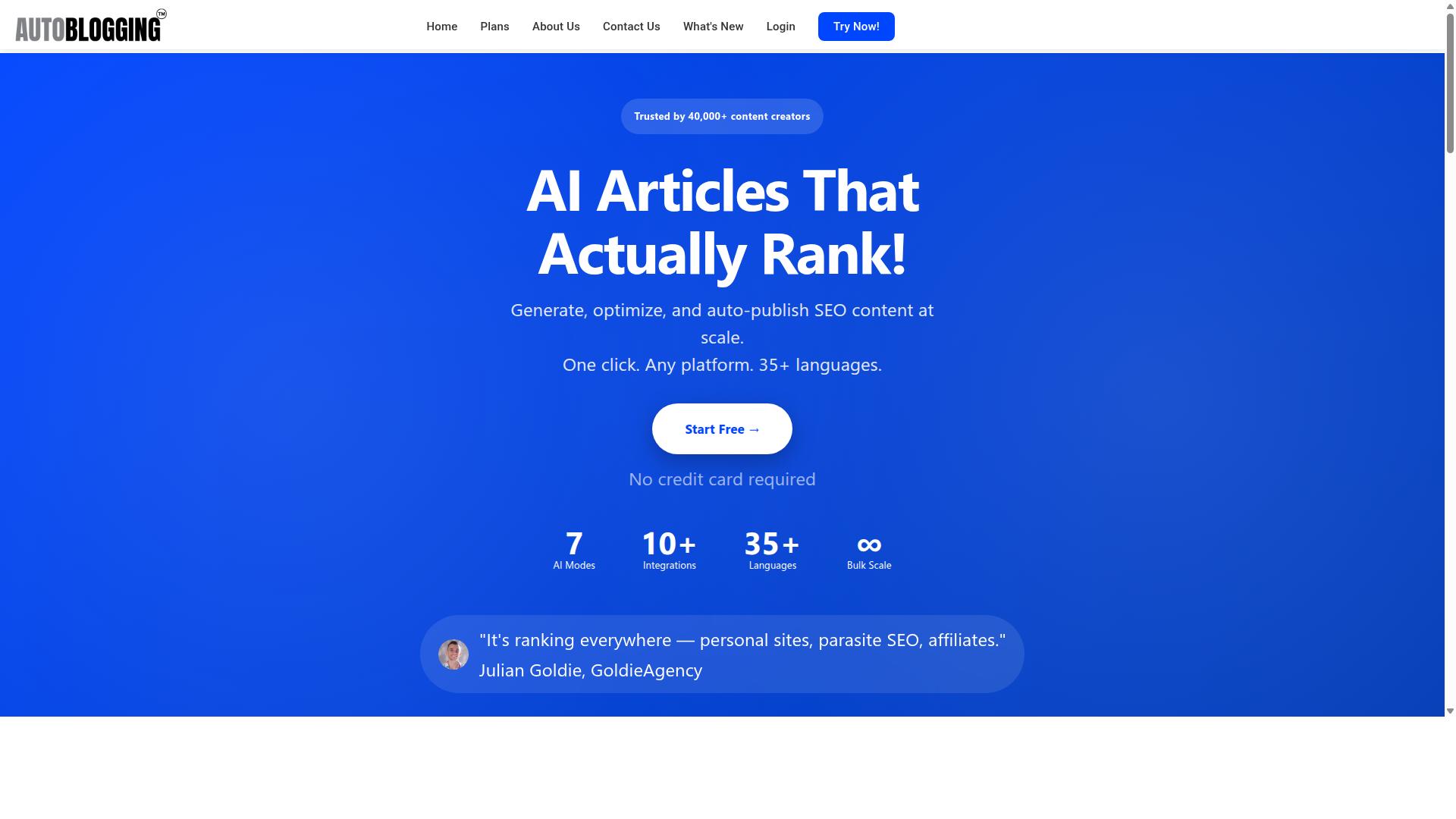
Autoblogging.ai earns the top spot by combining SERP analysis, bulk generation and direct WordPress publishing in one workflow. The platform streamlines every stage of SEO content writing for SaaS comparison pages. This unified approach sets it apart from fragmented AI writing tools that require multiple apps.
Autoblogging.ai is a product of Digimetriq.com. The mission focuses on helping bloggers, website owners and agencies save time through cutting-edge technology. The platform cuts content costs while give the power toing users with first drafts for their workflows.
Godlike Mode for SERP Competitor Analysis
Godlike Mode performs SERP competitor analysis, LSI keyword extraction and knowledge graph extraction. The platform uses this mode to deliver ready-to-publish content for SaaS product comparison pages. The process turns raw competitor data into structured article frameworks.
This workflow supports AI-driven writing for comparison table content and long-form SaaS marketing content. The extraction step ensures each draft targets the same search intent as top-ranking pages. Teams benefit from outlines that align with proven SEO ranking factors.
Bulk Generation and WordPress Integration
Bulk Generation supports up to 500 articles. Users upload a keyword list CSV and set Godlike Mode parameters for each batch. The system then schedules publish times and maps categories and tags automatically.
Autoblogging.ai offers this workflow to handle large-scale article writing automation projects. The WordPress integration supports unlimited sites with one-click publishing and scheduled auto-posting.
The combination of bulk generation and native publishing reduces manual steps in SaaS content strategy. Comparison pages and product review clusters can move from keyword list to live site in fewer touches. This capability makes Autoblogging.ai the strongest choice among top AI writers for high-volume SaaS SEO content needs.
2. Jasper
Jasper supplies strong brand-voice templates but lacks native bulk WordPress publishing and SERP competitor extraction. This AI article writer focuses on teams that need consistent tone across multiple writers. Its templates help structure SaaS product comparison content and marketing copy.
The platform offers 50+ content templates designed for product descriptions and feature announcements. Brand voice training learns company terminology and style guidelines over time. Team collaboration features include approval workflows and role-based permissions for larger organizations.
Creator plan starts at $49/month while the Teams plan begins at $125/month. Enterprise SaaS companies with 10 or more marketing team members represent the primary user base. A Chrome extension provides browser-based access to the core features.
Users can generate comparison page optimization content through structured templates. The system supports keyword optimization within individual documents. Long-form AI writing requires manual assembly across multiple generations.
Limitations include the absence of bulk publishing to WordPress sites. SERP competitor extraction remains unavailable as a native function. Teams must handle SEO ranking tasks through separate tools or manual processes.
3. Copy.ai
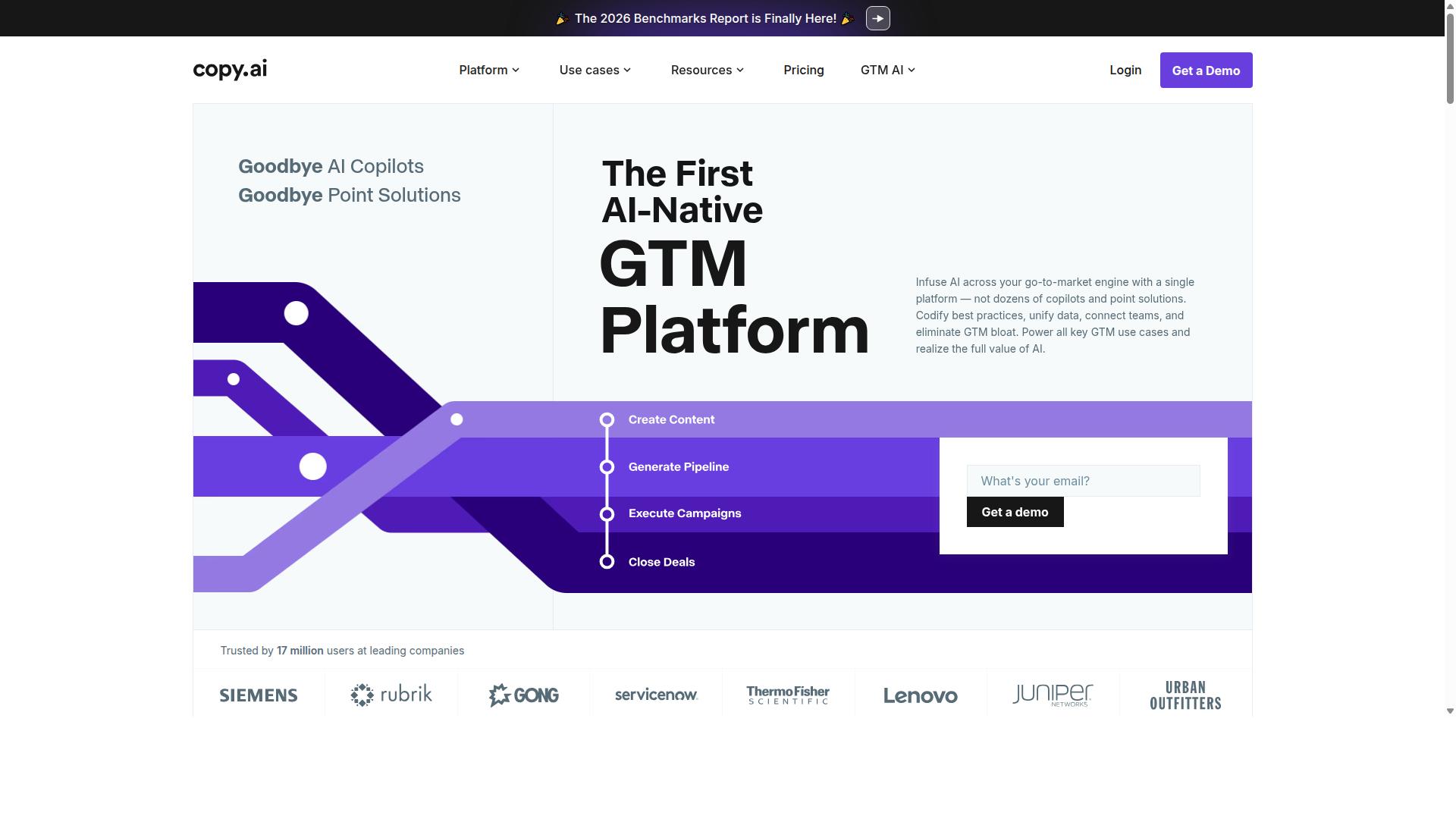
Copy.ai focuses on short-form marketing copy and offers limited long-form SEO article workflows. The platform centers around its Infobase feature that stores company information for consistent content accuracy.
Users connect their sales and marketing efforts through GTM AI Workflows. These automated sequences handle research, content creation, and publication steps in one system.
Copy.ai includes CRM integrations and content repurposing tools. The platform generates marketing materials, sales enablement content, and customer success documents from the same interface.
Free plans exist for basic testing. Pro access starts at $49/month according to public pricing information.
Typical user feedback highlights the convenience of drawing from one central knowledge base. Many SaaS teams appreciate having marketing and sales content generation in a single location.
Some reviewers note that long-form SEO article writing requires extra manual work. The system performs best when teams need consistent brand messaging across multiple content formats.
4. Writer
Writer emphasizes enterprise compliance and style-guide enforcement over rapid bulk generation. This enterprise AI platform focuses on governance capabilities that matter most for regulated SaaS environments.
Knowledge Graph technology keeps technical terminology consistent across all generated content. AI guardrails prevent material from violating brand guidelines or compliance requirements.
Long-form blog writing works through Playbooks and departmental voice profiles. These features support structured content creation for SaaS comparison pages and product documentation.
SOC 2 Type II, GDPR, HIPAA, and PCI compliance standards make Writer suitable for industries with strict data requirements. Contact sales handles pricing details for enterprise deployments.
Complex SaaS products benefit from this controlled approach to content generation. Teams handling regulated industries find the governance features address their specific constraints around terminology accuracy.
5. Frase
Frase provides SERP research briefs but requires additional tools for bulk publishing. This platform focuses on turning search data into structured outlines for SEO content writing. SaaS teams often use it when they need detailed briefs before starting the actual drafting process.
The tool runs a quick SERP analysis and generates a research brief within seconds. Users then build on that brief to create comparison pages and product guides. The workflow works well for individual articles but leaves gaps when teams need to produce many SaaS comparison pages at scale.
Frase includes 37 writing tools and brand profiles on every plan. These features help maintain consistent tone across different pieces. However, the platform stops short of handling full publishing cycles without outside help.
Teams working on keyword optimization can pull competitor data directly into their briefs. This saves time during the research phase. The process still requires manual steps when moving content into a live CMS or scheduling multiple posts.
Many marketers combine Frase with separate publishing tools to close these gaps. The platform earns strong marks for research speed and SEO focus. Its $49 per month Starter plan makes it accessible for smaller teams building SaaS marketing content.
6. Koala
Koala targets affiliate and blog workflows with built-in research yet limits monthly output volume. This AI article writer works well for solo SaaS founders who need quick SEO content writing. The platform generates long-form articles through one-click processes that speed up content creation.
Users gain access to Brand DNA features that help maintain consistent voice across SaaS comparison pages. The tool supports publishing directly to WordPress and Shopify for streamlined workflows. This setup suits budget-conscious teams focused on product comparison writing.
Typical monthly caps vary by plan starting at $9 per month for Essentials tier. Integration scope covers standard publishing platforms rather than complex enterprise systems. The service provides basic security measures without advanced compliance certifications.
Public reviews show a 3.5 out of 5 rating based on limited feedback from users. The platform excels at producing SEO articles quickly for small teams. Many users appreciate the straightforward approach to AI content creation.
Koala positions itself as an accessible option for SaaS content strategy needs. The tool handles keyword optimization and article writing automation in a single interface. Teams focused on comparison page optimization may find the feature set sufficient for basic requirements.
Long-form AI writing capabilities extend to 3,500 word articles when volume limits allow. The AI writing assistant helps with initial drafts and research integration. Users report that the platform works best when combined with manual editing for final polish.
7. Rytr
Rytr offers budget-friendly short and medium-form generation across many languages.
This AI writing tool serves SaaS solopreneurs and freelancers who need affordable template-based content generation. The platform provides over 40 templates along with custom tone options that adapt to different brand voices.
Users can start with a free plan before moving to paid options priced at $7.50 monthly for unlimited access. The service supports one custom tone on the unlimited plan and five custom tones on the premium tier.
Teams creating SaaS comparison pages benefit from the template library when drafting product comparison writing quickly. The browser-only interface works well for those who prefer not to install additional software.
Reviewers on G2 give Rytr a 4.7 out of 5 rating based on 819 reviews. This score reflects consistent performance for budget-conscious users who prioritize cost over advanced publishing features.
Marketers focused on comparison page optimization find the tone customization useful for matching different audience segments. The AI text generator handles keyword optimization through its template structure without requiring complex setup steps.
How to Choose the Right Option
First sentence: Match AI article writer capabilities to your site type, content volume and publishing workflow.
Site type determines which features matter most. Affiliate marketers need strong keyword optimization and comparison table content. Client websites require consistent tone and SEO ranking across multiple domains.
Local sites benefit from location-specific language support. Portfolio sites focus more on quality than volume. Parasite SEO projects demand rapid article writing automation to test many keywords quickly.
Monthly article count shapes your tool selection. Under 40 articles allows manual oversight and editing time. One hundred plus articles requires article writing automation and AI content creation at scale.
WordPress API integration saves hours on publishing tasks. Users who manage multiple blogs need direct upload capabilities. Teams that publish to custom platforms may prefer flexible export options instead.
Language requirements affect content quality and reach. English-only projects work with most AI writing tools. Multilingual SaaS comparison pages need platforms that handle translation without losing keyword optimization.
Autoblogging.ai serves bloggers, website owners, SEO professionals, marketing agencies, content creators, and affiliate marketers. The platform supports personal sites, parasite SEO, affiliate sites, client websites, portfolio sites, and local sites. This broad coverage matches diverse publishing needs.
Content volume needs also influence your decision. Lower volume users can focus on precision and manual refinement. Higher volume operations gain efficiency from consistent AI-driven writing across many comparison pages.
Budget considerations matter when scaling content production. Different AI copywriting platforms offer varied pricing structures. Evaluate cost per article against your expected output to find the right fit.
Integration requirements complete the evaluation process. Some teams need seamless connections to existing workflows. Others prioritize standalone tools with strong export functionality for their SaaS marketing content.
Final Verdict
Autoblogging.ai leads for teams that need SERP analysis, bulk output and WordPress automation in a single platform.
Trusted by 40,000+ content creators, the platform has generated over 1 million articles. These numbers reflect consistent delivery for SaaS teams that produce comparison content at scale.
SERP competitor analysis and semantic SEO tools help writers surface real ranking opportunities for product comparison pages. The 21-point SEO audit flags missing elements that affect how search engines treat comparison table content.
Users gain access to one-click WordPress publish and 35+ integrations that connect directly to existing marketing stacks. Credits rollover each month, so teams avoid losing unused capacity during slower production cycles.
35+ languages and 10+ AI modes give writers flexibility when localizing SaaS comparison pages for different markets. The included human proofreader checks every article before publication.
New features ship weekly, which means the platform evolves faster than most static AI writing tools. A 4.9 average rating shows that creators value both the output quality and the ongoing improvements.
Frequently Asked Questions
How do the 7 Best AI Article Writers for SaaS Comparison Pages help create unbiased product reviews?
The 7 Best AI Article Writers for SaaS Comparison Pages excel at generating neutral, data-driven comparisons by analyzing features, pricing, and user feedback without promotional bias, ensuring your content builds trust with potential customers.
What key features should I look for when evaluating the 7 Best AI Article Writers for SaaS Comparison Pages?
Look for strong SEO integration, support for technical terminology, customizable templates for side-by-side tables, and real-time research capabilities to match the standards highlighted in the 7 Best AI Article Writers for SaaS Comparison Pages.
Can AI tools from the 7 Best AI Article Writers for SaaS Comparison Pages improve search rankings for review content?
Yes, these specialized AI writers optimize articles with relevant keywords, structured headings, and comprehensive coverage, helping SaaS comparison pages rank higher for competitive queries.
How accurate are the outputs from the top tools in the 7 Best AI Article Writers for SaaS Comparison Pages?
The leading options maintain high accuracy through source citation and fact-checking modules, reducing errors in complex SaaS feature breakdowns while allowing human editors to refine final drafts.
Are there free trials available for the AI writers featured in the 7 Best AI Article Writers for SaaS Comparison Pages?
Most of the recommended tools offer free trials or limited plans, letting you test their ability to produce high-quality SaaS comparison articles before committing to a subscription.
How can I integrate the 7 Best AI Article Writers for SaaS Comparison Pages into my existing content workflow?
These AI platforms typically connect via APIs or browser extensions with tools like Google Docs and CMS systems, streamlining the process from research to publishing polished comparison pages.
LINKBLOCK:START LINKBLOCK:END